The mediterranean sea have a small island whose name is sicily which is potentially the best for the route in middle ages so this island got many conquers e.g Saracens, Normans, and Spaniards. But none of them stay for long so sicilians banded together in groups to protect their own land and carry out their own justice. These private armies or groups organized themselves and grew powerful and that they turned against the landowners and became the sole law of many of the estates, extorting money from the landowners in return for protecting the latter’s crops. The mafia successfully operate and outlasted Sicily’s successive foreign governments. The term mafia came from a Sicilian-Arabic slang expression that means “acting as a protector against the arrogance of the powerful,” Mafia’s peculiar system of private justice, which was regulated by a complicated moral code. This code was based on omertà—i.e., the obligation never, under any circumstances, to apply for justice to the legal authorities and never to assist in any way in the detection of crimes committed against oneself or others. The right to avenge wrongs was reserved for the victims and their families, and to break the code of silence was to incur reprisals from the Mafia. By about 1900 the various Mafia “families” and groups of families based in the villages of western Sicily had joined together in a loose confederation, and they controlled most of the economic activities in their respective localities.
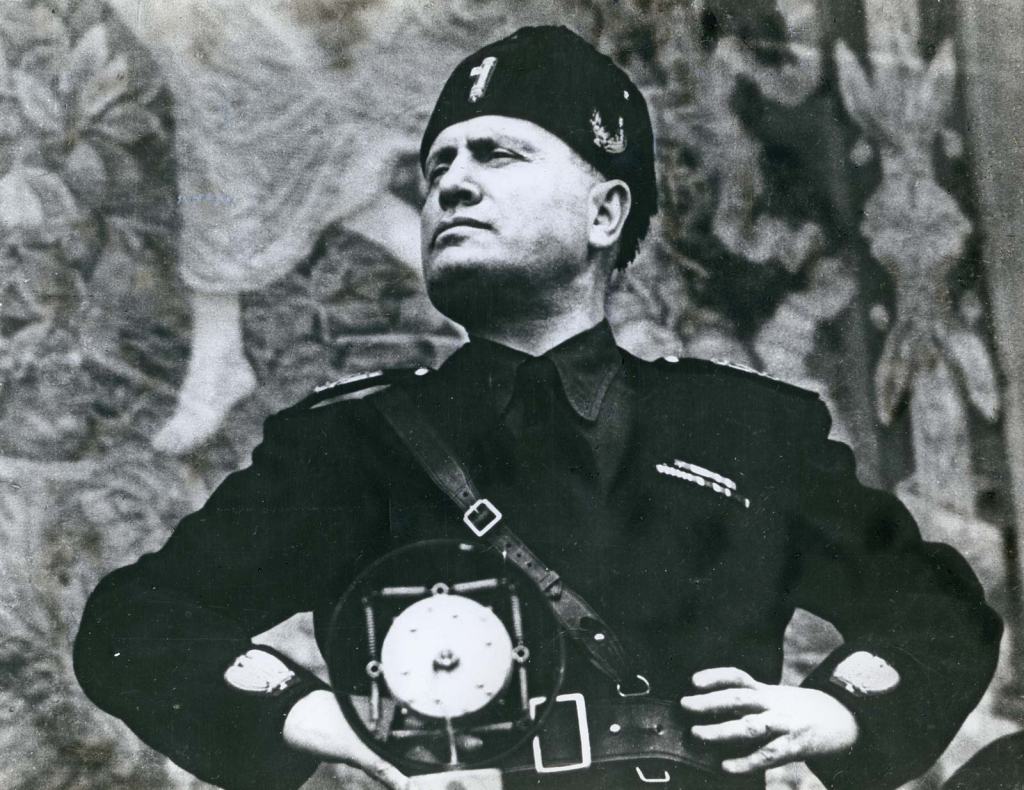
In the early 1920s Benito Mussolini’s Fascist regime came close to eliminating the Mafia by arresting and trying thousands of suspected mafiosi and sentencing them to long jail terms. Following World War II, the American occupation authorities released many of the mafiosi from prison, and these men proceeded to revive the organization. The Mafia’s power remained somewhat weakened in the rural areas of central and western Sicily, however, and its activities henceforth were directed more to urban Palermo—and to industry, business, and construction, as well as the traditional extortion and smuggling. During the late 1970s the Mafia in Palermo became deeply involved in the refining and transshipment of heroin bound for the United States.
The enormous profits sparked fierce competition between various clans within the Mafia, and the resulting spate of murders led to renewed governmental efforts to convict and imprison the Mafia’s leadership. In a 1987 “maxi-trial” 338 Sicilian mafiosi were convicted on a variety of charges.
Migration TO US and South America
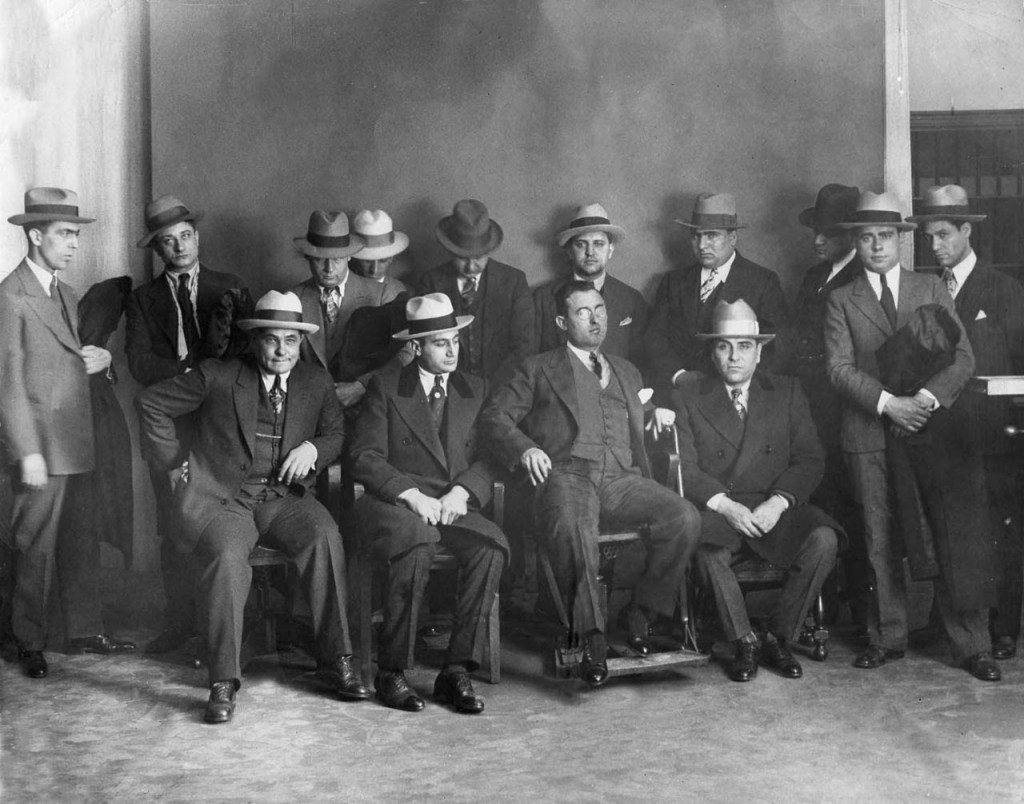
There were, in the groups that emigrated from Sicily and Italy in the late 19th and early 20th centuries, individuals who had been part of the Mafia and who, in their new countries (particularly the United States and parts of South America), set about reproducing the criminal patterns that they had left in Europe. By the early 1930s the organized Italian criminals in the United States had wrested control of various illegal activities from rival Irish, Jewish, and other gangs, and they proceeded, after a bloody nationwide conflict in 1930–31, to organize themselves into a loose alliance with a clearly defined higher leadership. After the repeal of Prohibition in 1933, the American Mafia abandoned its bootlegging operations and settled into gambling, labour racketeering, loan-sharking, narcotics distribution, and prostitution rings. It grew to be the largest and most powerful of the U.S. syndicated-crime organizations, and it reinvested the profits accruing from crime in the ownership of such legitimate businesses as hotels, restaurants, and entertainment ventures.
Us Agencies Investigations
Investigations conducted by U.S. government agencies in the 1950s and ’60s revealed that the structure of the American Mafia was similar to that of its Sicilian prototype. (In the United States, the organization had adopted the name Cosa Nostra [Italian: “Our Affair”].) From the 1950s, Mafia operations were conducted by some 24 groups, or “families,” throughout the country. In most cities where syndicated crime operated, there was one family, but in New York City there were five: Gambino, Genovese, Lucchese, Colombo, and Bonanno. The heads of the most powerful families made up a commission whose main function was judicial. At the head of each family was a “boss,” or “don,” whose authority could be challenged only by the commission. Each don had an underboss, who functioned as a vice president or deputy director, and a consigliere, or counselor, who had considerable power and influence. Below the underboss were the caporegime, or lieutenants, who, acting as buffers between the lower echelon workers and the don himself, protected him from a too-direct association with the organization’s illicit operations. The lieutenants supervised squads of “soldiers,” who often had charge of one of the family’s legal operations (e.g., vending machines, food-products companies, or restaurants) or illegal operations involving prostitution, gambling, or narcotics.
The Fall
By the late 20th century prosecutors in America and Italy began successfully employing tough anti-racketeering laws to convict top-ranking mobsters. Additionally, some Mafiosi, in order to avoid long prison terms, began breaking the once-sacred code of omerta and testified against fellow mob members. By the start of the 21st century, after hundreds of high-profile arrests over the course of several decades, the Mafia appeared to be weakened in both countries; however, it was not eliminated completely and remains in business today.
 socially and historical events